
India’s Rs 240 Billion Nepal Aid: What Happens Next
India has pledged Rs 56 billion in grants and Rs 184 billion in energy credit to Nepal. Here is what is agreed, what remains pending, and what comes next.

 Facebook
 WhatsApp
 X (Twitter)
 LinkedIn
 Telegram
 Reddit
 Threads
 Bluesky
 LINE
 Viber
 Pinterest

KATHMANDU, November 24, 2026 — India’s new Nepal aid package has a headline value of Rs 240 billion, but the announcement does not mean that the entire amount has already reached Nepal’s treasury. The package combines reconstruction grants with an energy-sector credit facility whose detailed terms and projects still need to be settled.
The distinction matters after Prime Minister Balendra Shah’s November 22–23 visit to India. A commitment can help prepare investment, while actual spending depends on agreements, project readiness and implementation.
What the Nepal aid package contains
The joint statement issued on November 23 divides the assistance into two parts:
Component | Value in Nepali rupees | Stated purpose |
|---|---|---|
Grant assistance | Rs 56 billion | Post-disaster reconstruction and new infrastructure |
Concessional credit line | Rs 184 billion | Energy-sector projects |
The credit line accounts for about 77 percent of the total; grants make up the remaining 23 percent. These are different financing instruments: a grant does not create the same repayment obligation as a loan.
Why the money will not arrive all at once
Finance Minister Swarnim Wagle told Parliament’s Finance Committee on Tuesday that Nepal would use the credit according to project needs and progress. Interest, repayment and grace-period terms still require technical negotiations, he said.
It would therefore be premature to describe the facility as a finalized loan for a named project or to calculate its eventual debt-servicing cost.
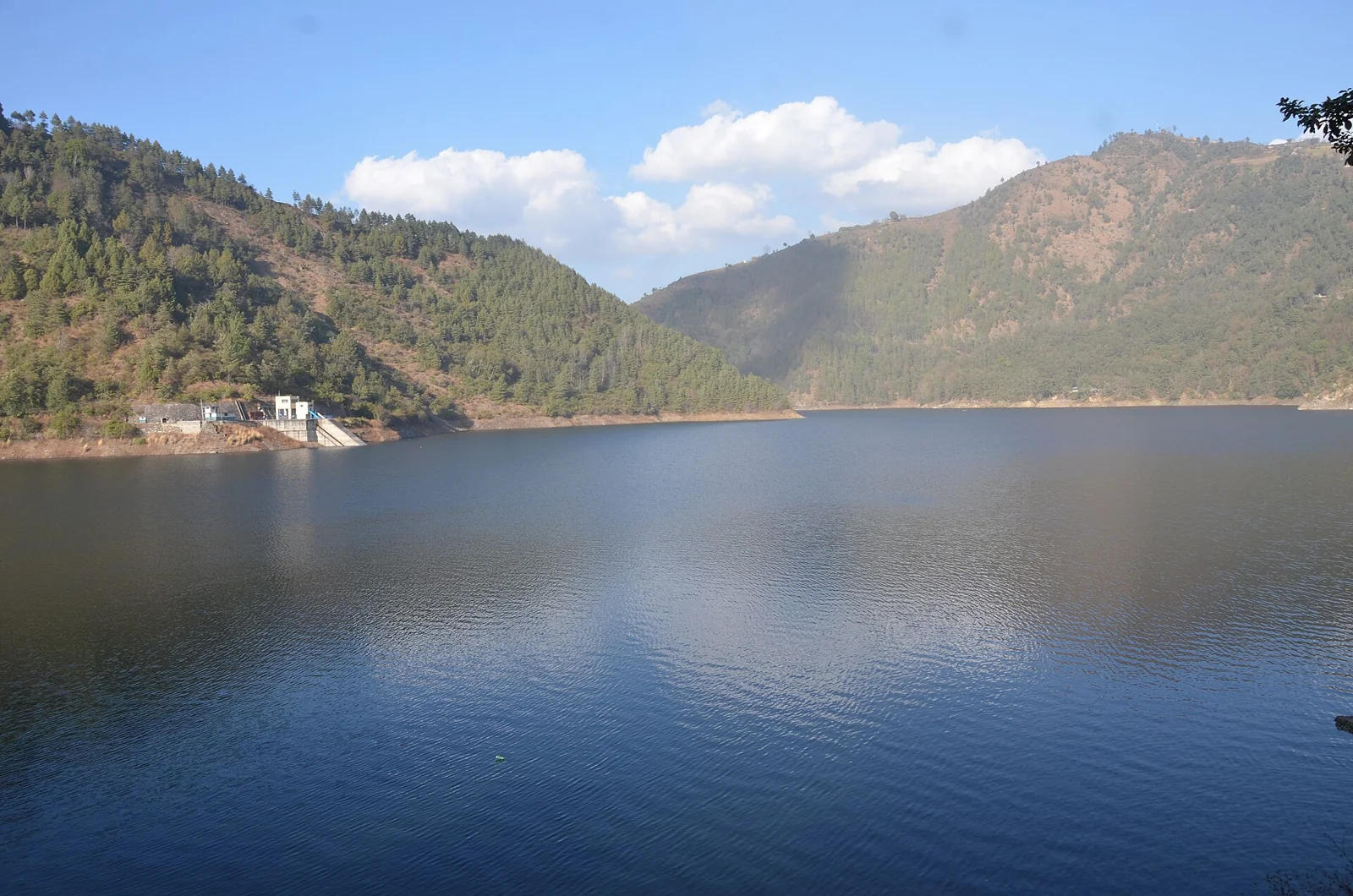
Kulekhani reservoir, Makwanpur, 25 December 2016. File photo for energy-sector context; no allocation to this project has been announced. Photo: Pratap Baniya / Wikimedia Commons · CC BY-SA 4.0. Resized; composition unchanged.

The practical test is project delivery
The Kathmandu Post’s November 24 reporting recalls Nepal’s difficulty in fully using an earlier Indian reconstruction credit commitment. That experience makes the gap between a pledge and usable finance central to assessing the new package.
For readers tracking delivery, the next useful documents will be the financing agreement, the approved project list and subsequent disbursement information. Those records should make it possible to assess borrowing costs, procurement conditions and whether construction is moving.
Nepal 360 analysis: A large credit ceiling can remove one financing constraint, but it cannot by itself supply a completed design, a transmission corridor or an operating asset. The package’s development value will be clearer when projects, responsibilities and implementation milestones are published.
For background on the visit’s wider agenda, read our earlier explainer on Nepal–India priorities.
Featured photo: Hyderabad House, New Delhi, February 2022, by Aloofmanish / Wikimedia Commons, CC BY-SA 4.0. File photo, resized; not a photograph of the November 2026 talks.

How did this story make you feel?
The discussion
0India’s Rs 240 Billion Nepal Aid: What Happens Next
Your perspective matters.
Sign in to share your thoughts and reply to other readers.
Reader perspectives
Newest firstStart the conversation
No comments yet. A thoughtful perspective can make this story go further.