
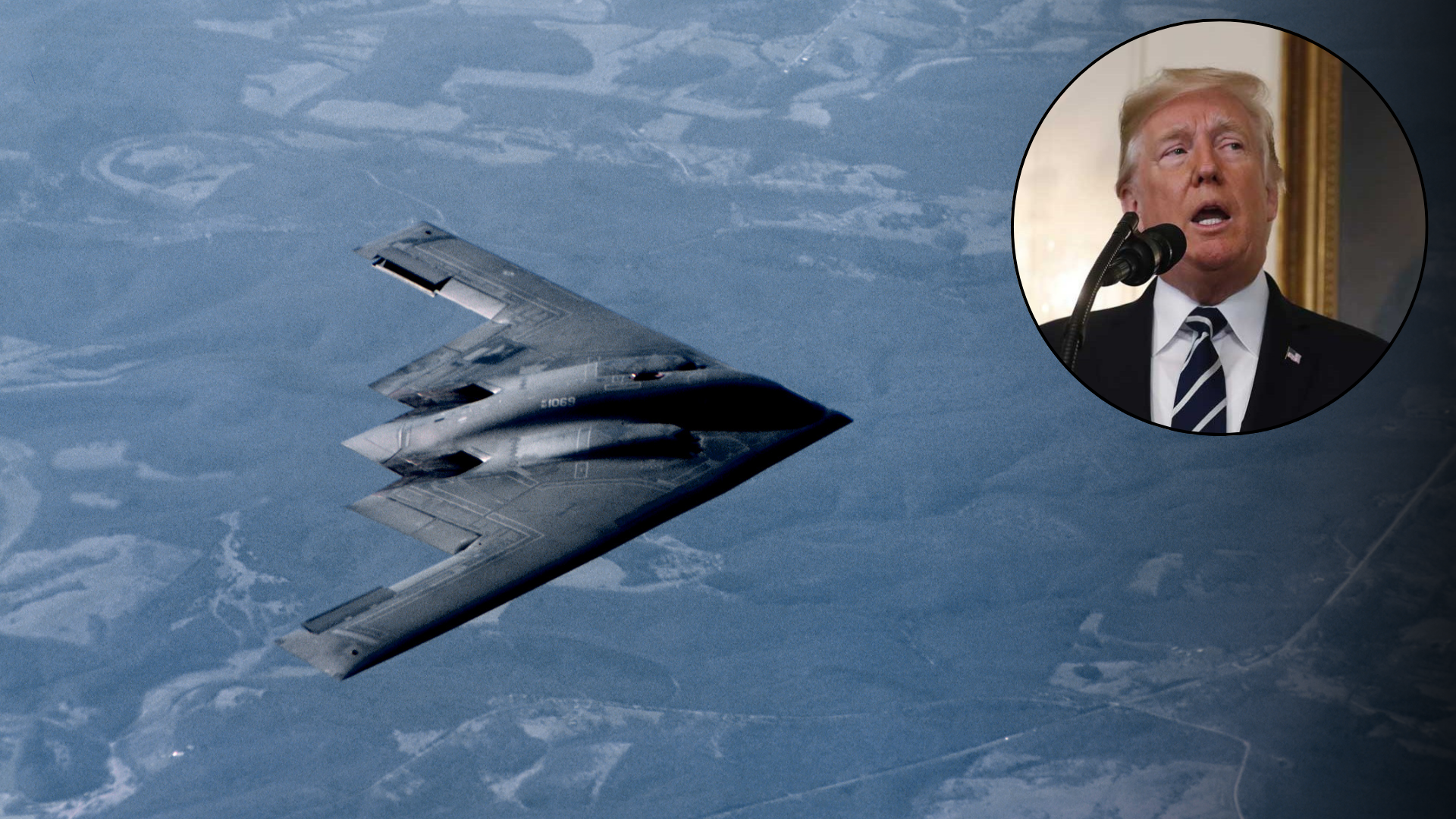
In a bold and risky military maneuver, the U.S. has officially joined Israel in its aggressive campaign against Iran’s nuclear program.
President Donald Trump confirmed late Saturday that the U.S. military has conducted precision strikes on three major Iranian nuclear sites. According to Trump, the targets were selected in coordination with Israeli defense forces, aiming to disrupt Iran’s nuclear development capabilities and send a powerful message to Tehran.
The announcement followed hours of speculation and tension, with global news outlets tracking increased military movements in the Middle East. Trump stated that the airstrikes targeted facilities at Fordo, Isfahan, and Natanz—all key pillars of Iran’s uranium enrichment infrastructure.
This move significantly escalates tensions between Iran and the West, as well as within the region. Although there has been no official acknowledgment from the Iranian government about the airstrikes, IRNA, Iran’s state-run news agency, reported early Sunday that attacks had indeed targeted the three nuclear sites. However, the agency did not release details on the scale of damage or potential casualties.
The Targets: Fordo, Isfahan, and Natanz
Each of the targeted locations plays a major role in Iran’s nuclear capabilities:
- Fordo is built deep within a mountain and is one of Iran’s most fortified nuclear sites. It houses advanced centrifuges and has been under constant surveillance by international inspectors.
- Isfahan is home to uranium conversion facilities. It's considered a major processing hub that converts raw uranium into a form that can be enriched.
- Natanz is Iran’s largest nuclear enrichment facility, often at the center of international negotiations and previous sabotage attempts.
Hitting all three sites at once signals a calculated strategy to deliver a crippling blow to Iran’s nuclear ambition, rather than a symbolic warning.
Trump Speaks Out
In a statement from his Florida residence, Trump said,
“The United States will not stand by while Iran threatens global security. We acted decisively in partnership with Israel to ensure that nuclear weapons do not fall into the hands of those who chant ‘Death to America.’”
The former president described the strike as a necessary act of self-defense and global security maintenance. His rhetoric echoed long-standing U.S. concerns over Iran’s nuclear ambitions, which have been a cornerstone issue since the collapse of the 2015 Iran Nuclear Deal.
Iranian Response Still Unclear
As of Sunday morning, Iran has not issued an official response. Analysts believe the silence from Tehran may be strategic, either due to internal assessments of the damage or deliberations on how to respond without igniting full-scale war.
However, Iran has repeatedly warned of retaliation against any act of aggression on its soil. Supreme Leader Ayatollah Ali Khamenei has often stated that any strike on its nuclear infrastructure would result in “severe consequences for the enemies of Iran.”
Some Iranian news sources and social media users have posted unverified images of fires and emergency crews near the Natanz facility, but no official images have been released. IRNA’s vague acknowledgment further raises concerns that the Iranian leadership is still calculating its next move.
Regional and Global Concerns
The U.S. strike comes at a time when Middle East tensions are already at a boiling point. Ongoing conflicts in Syria, Israel-Gaza flare-ups, and proxy battles in Yemen have created a volatile environment. Many fear that this action might serve as a trigger for a broader regional war.
Neighboring countries like Iraq and Turkey have called for restraint. The United Nations has scheduled an emergency Security Council meeting to address the issue. China and Russia, both critical of U.S. policy in the region, have expressed “serious concern” over the strike.
Joining Hands with Israel
The Israeli Defense Forces (IDF) reportedly shared intelligence with the U.S. ahead of the operation. Israel has long targeted Iran’s nuclear infrastructure through covert attacks, cyber warfare, and sabotage. However, a direct military alliance with the U.S. adds a new layer of complexity and shows a more public stance of cooperation against Iran.
Israeli Prime Minister Benjamin Netanyahu praised the operation, stating:
“We thank President Trump and the American people for standing with Israel in our shared mission to stop Iran’s nuclear threat.”
This strike may be seen as a culmination of years of coordinated warnings and red lines set by both nations. However, it also places Israel and the U.S. in a more vulnerable position if Iran chooses to retaliate directly or through its proxy forces in Lebanon, Iraq, and Yemen.
Public Reaction and Political Implications
The airstrikes have sparked sharp reactions across the globe and within the U.S. itself. While some American political figures have backed the move as a necessary step to stop nuclear proliferation, others have expressed concern about the lack of congressional approval and the possibility of dragging the U.S. into another long-term conflict.
Former Secretary of State John Kerry criticized the decision, calling it “reckless and without diplomatic foresight.” He emphasized the need for dialogue and diplomacy, rather than “military provocation.”
Meanwhile, supporters of Trump see this move as a demonstration of strong leadership and national security focus, especially as he positions himself for a strong return in the next U.S. election cycle.
What Comes Next?
While the immediate impact of the strikes is still being assessed, what lies ahead is a period of intense diplomatic maneuvering, possible military retaliation, and a rising sense of uncertainty. The world now watches for Tehran’s reaction—a single move from the Iranian leadership could change the course of events in the region and beyond.
The unfolding situation is one of the most dangerous standoffs the region has seen in years. All eyes are now on Iran's nuclear future and how global powers will respond.

Comments
0