
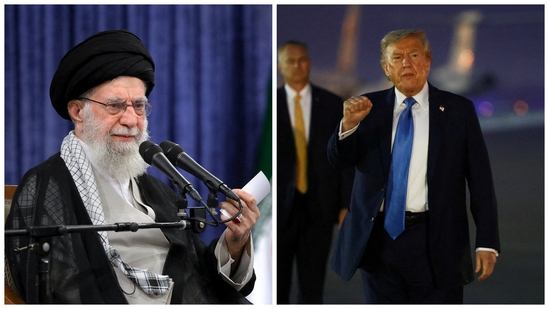
"Big moves, bold words." That's how the world is reacting to U.S. President Donald Trump's latest remarks on Iran, where he hinted at the possibility of a regime change after the United States joined Israel in striking Iranian nuclear facilities. This unexpected turn of events has thrown the Middle East into a new wave of uncertainty.
On Saturday, Trump said the U.S. military conducted precision airstrikes on three Iranian nuclear-related sites. These include the facilities in Fordow, Isfahan, and another undisclosed location. The strikes reportedly aimed to dismantle parts of Iran’s controversial nuclear program, a long-standing concern for both the U.S. and Israel.
While the Iranian government has not officially acknowledged the damage, the state-run IRNA news agency confirmed explosions were heard near nuclear development areas. These attacks mark a major escalation in regional conflict and a rare moment of open military cooperation between the United States and Israel.
Trump's Bold Statement
President Trump did not stop at confirming the strikes. Speaking from the White House, he said, "The people of Iran deserve better. This could be the beginning of a new chapter. Change in leadership is possible — even necessary." These words have added fuel to already rising tensions between Tehran and Washington.
His comments suggest that the U.S. may be open to supporting or even accelerating internal political shifts in Iran, a country ruled by the Islamic Republic since 1979. Whether this was merely political rhetoric or a sign of deeper intentions remains unclear.
Coordinated Military Effort
The strikes come amid increasing concern that Iran is getting dangerously close to developing nuclear weapons. Both U.S. and Israeli intelligence agencies have expressed alarm over uranium enrichment activities that reportedly exceed the limits set under the 2015 Iran Nuclear Deal, officially known as the Joint Comprehensive Plan of Action (JCPOA).
Israel has long opposed the JCPOA, claiming Iran was never in full compliance. President Trump previously withdrew from the deal in 2018, branding it "one of the worst agreements ever made" and reimposed severe sanctions on Iran.
This weekend’s operation appears to be a joint military initiative, with Israeli fighter jets reportedly leading the aerial assault, while U.S. cyber teams and drones provided tactical support. Defense analysts believe this kind of teamwork represents a new phase in U.S.-Israeli military coordination.
Tehran's Silence
As of now, Iranian officials have not issued a formal response. However, the Islamic Revolutionary Guard Corps (IRGC) has reportedly increased its alert level, and state media have been showing old footage of past military victories, possibly as a way to rally internal support.
Social media platforms in Iran saw a spike in activity shortly after the attacks. Some Iranians expressed fear, others defiance. A trending hashtag in Persian read, “#WeWillResist,” signaling national resilience. But reports also suggest growing unrest among citizens already suffering under economic stress and international sanctions.
Global Reactions
Countries around the world are closely watching this unfolding situation. The European Union urged "maximum restraint" and called for a return to diplomacy. Russia and China, both allies of Iran, condemned the airstrikes, warning they could destabilize the region further.
Meanwhile, regional neighbors like Saudi Arabia and the United Arab Emirates, long-time critics of Iran’s nuclear ambitions, have maintained silence, possibly supportive of the attack but unwilling to risk backlash publicly.
Leadership Change: A Sensitive Subject
The topic of a leadership change in Iran is a sensitive one. For decades, Western powers have avoided direct calls for regime change, fearing it would backfire or embolden hardliners. But Trump’s statement has shattered that diplomatic caution. Analysts believe this message could encourage opposition groups inside Iran, but it could also lead to more crackdowns by the government.
Some worries pushing for change could trigger widespread protests, civil unrest, or even war. The memory of the U.S.-led Iraq invasion in 2003, which also started with talk of leadership change, still haunts foreign policy experts.
What Comes Next?
There is no confirmed casualty report yet from the strikes, but satellite images suggest that some infrastructure was significantly damaged. U.S. military sources claim the operation was “surgical,” designed to avoid civilian areas while targeting nuclear components.
Trump’s administration has emphasized that they are not seeking full-scale war but wants to "reduce the threat" posed by Iran’s nuclear capabilities. Whether that aligns with actions on the ground is still being debated.
Diplomatic channels are reportedly open through third-party nations like Qatar and Switzerland, which often act as mediators between Iran and the West.
A Moment of High Stakes
This latest development is more than just a military strike. It represents a dramatic shift in how the U.S. may deal with Iran moving forward. Trump's mention of a potential leadership change has now become the focus of global media and international diplomacy.
Observers note that any political instability in Iran could send shockwaves across the region, affecting oil prices, security alliances, and the delicate balance of power in the Middle East.
While nothing is guaranteed, one thing is clear: the world has entered a new phase in the Iran-U.S. standoff.

Comments
0