
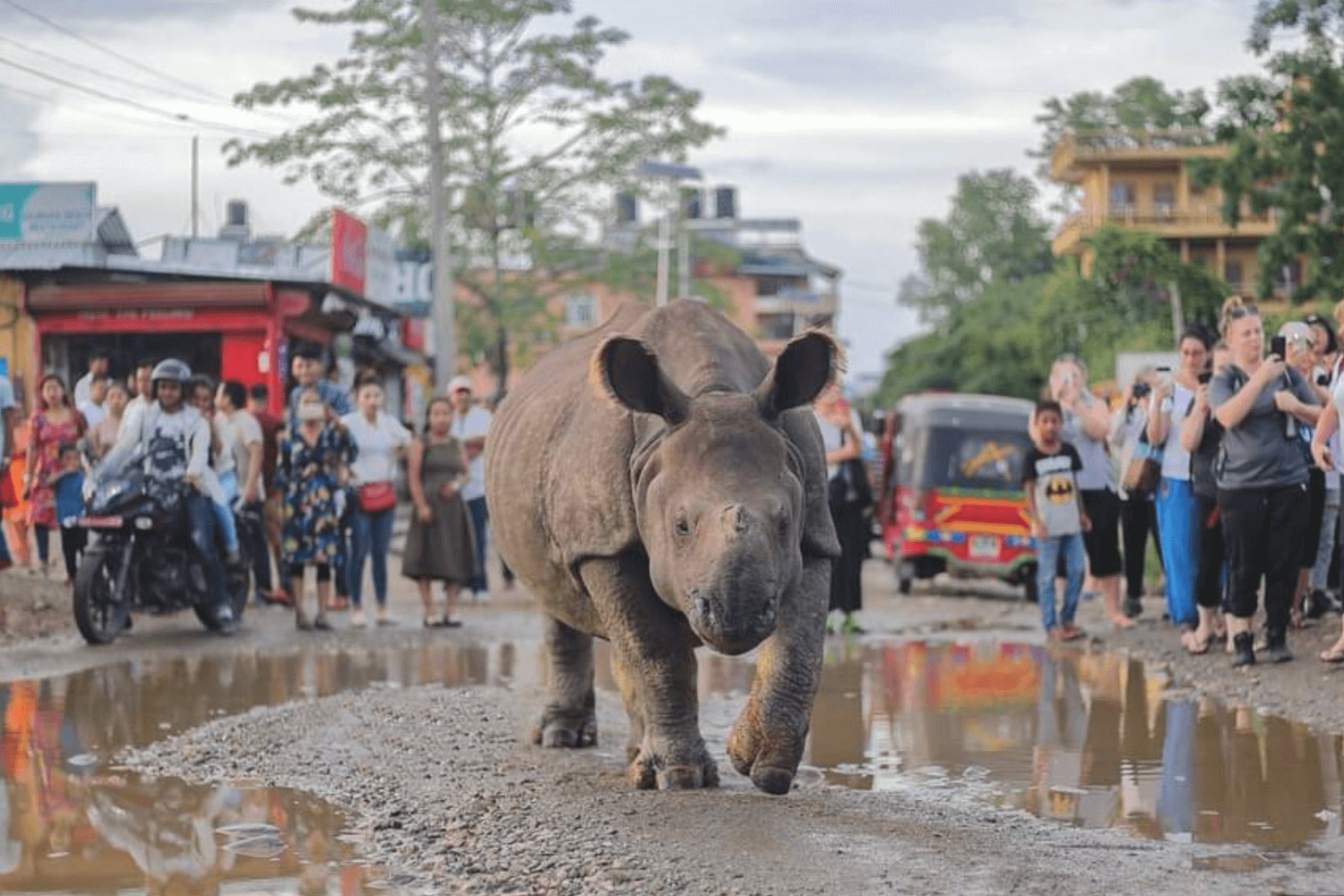
Shocking and sad news came from Chitwan on Sunday evening when a 60-year-old man, Jange Kumal from Bharatpur-28, died after a rhino attack near the Rapti River. The incident has raised numerous questions about human-wildlife conflict in areas near Chitwan National Park and the danger it poses to villagers living nearby.
A Quiet Evening Turned Tragic
The attack happened around 8 pm on Sunday. According to the police, Jange Kumal was fishing near the edge of his village in Meghauli, a place close to Chitwan National Park. It was a peaceful evening, and Kumal was busy trying to find a good spot to cast his net and bring back some fish for his family.
But this calm scene suddenly turned into a nightmare when a rhinoceros came charging toward him from the nearby jungle. The huge wild animal struck Kumal, causing him serious injuries.
Local Residents Raise Concern
Some nearby villagers rushed toward the scene upon hearing his screams. They tried their best to help Kumal and immediately called the police for help. The villagers were able to move him away from danger and rushed him to Bharatpur Hospital in Chitwan.
Death After Injury
Jange Kumal was critically injured in the attack. His body sustained deep wounds due to the powerful attack by the rhino. The hospital tried its best to treat him and save his life.
Unfortunately, despite their best efforts, doctors were unable to keep him alive, and Kumal was pronounced dead at 9 pm in Bharatpur Hospital. His death has shocked the local community and raised worries about growing human-wildlife conflict in Chitwan.
Police Confirm Death
The incident was confirmed by Chitwan's deputy superintendent of police, Rabindra Khanal. He identified the victim as a 60-year-old man from Bharatpur-28 and assured that the police were investigating the incident in detail.
He explained that the attack seemed to be a conflict between human activity and wildlife. The villagers often venture close to forests and rivers to find food or resources, putting them at risk of encountering wild animals.
Chitwan National Park and Conflict
The Rapti River and Chitwan National Park are well known for their rich wildlife, including numerous species of mammals, birds, and reptiles. Among the most majestic creatures in Chitwan is the Greater One-Horned Rhinoceros (Rhinoceros unicornis). Chitwan is home to about 694 rhinos, making it a key stronghold for conserving the species.
But this rich wildlife comes with a unique set of problems. Chitwan's villagers live close to the park's borders, and their daily lives often bring them into close contact with wildlife.
Rising Concern Among Locals
This incident highlights a growing concern for the villagers in Chitwan. Encounters with wild animals, especially rhinos and tigers, have become more frequent in areas close to Chitwan National Park. The villagers rely on nearby forests and rivers for their resources, putting them at greater risk.
Some locals say the park authorities should do more to install protective fences or create buffer zones to help keep the wildlife safely within the park's borders and avoid such attacks in the future.
Livelihood Dependence on Nature
For many people in Chitwan, the nearby forests and rivers are not just a rich ecosystem but a key part of their livelihood. They go fishing in the Rapti River, collect wood and grass from forests, and sometimes grow their agricultural land close to the park’s borders.
This means their daily routines often bring them face to face with wild creatures. Although Chitwan National Park authorities and organizations have made numerous efforts to reduce conflict, these initiatives have not eliminated the danger.
Rising Incidents of Conflict
The attack on Jange Kumal is not the first of its kind in Chitwan. There have been numerous reports of human-wildlife conflict in the area, where villagers suffer damage to their property, lose their crops and livestock, and sometimes, tragically, lose their lives.
This highlights the delicate balance that must be maintained between conserving wildlife and protecting human communities who live alongside forests.
Local Appeal to Authorities
Some locals are now calling upon authorities to implement stronger measures to reduce human-wildlife conflict. They say this could include putting up physical barriers, extending protective fences, and organizing community education programs about how to avoid encounters with wild creatures.
Such initiatives may help to cut down the number of attacks and make sure people can live safely alongside Chitwan’s rich wildlife.
Chitwan's Rich Wildlife
The Chitwan National Park is a UNESCO World Heritage Site and a key destination for tourists who come to view wildlife in their natural habitats. The park covers 932 square kilometers of forests, grasslands, and rivers and is home to numerous species, including elephants, Royal Bengal tigers, leopards, and sloth bears.
The Greater One-Horned Rhinoceros is a flagship species for Chitwan and a symbol of successful wildlife conservation. Nonetheless, conserving this majestic creature while protecting nearby communities from harm is a challenging task.
Need for Sustainable Solutions
Finding sustainable solutions to human-wildlife conflict is a growing priority in Chitwan. It will require cooperation from park authorities, local communities, wildlife organizations, and the government. The aim should be to create a future where both people and wildlife can coexist safely.

Comments
0