
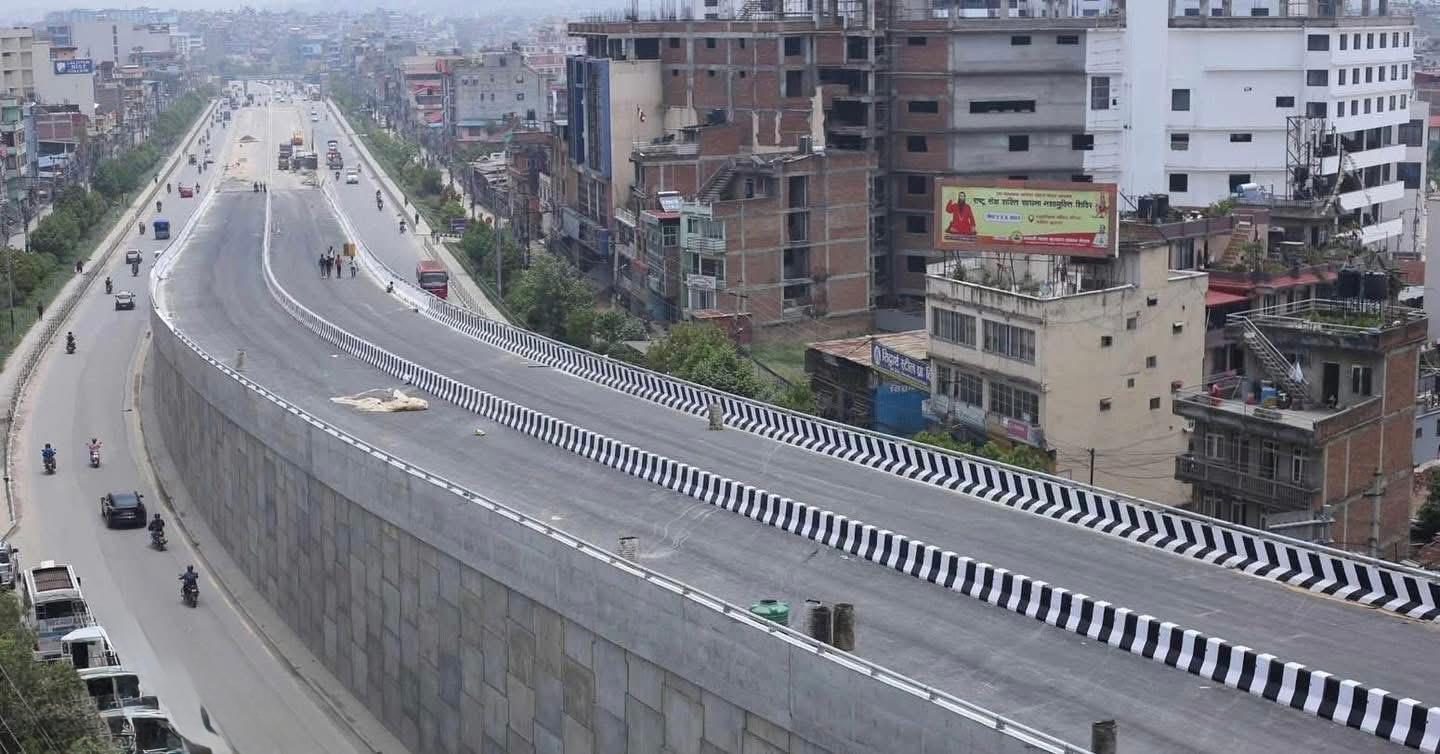
Nepal’s Longest Flyover Inaugurated at Gwarko
Breathtaking views, smoother rides, and major traffic relief, the Gwarko Flyover in Lalitpur is finally complete and ready for public use. With a total length of 576.2 meters in total length including ramps and bridge structure with a 36.2 meter central bridge.It's spans 320 meters toward Lagenkhel and 185 meters towards Satdobato. The flyover is 16.4 meters wide and designed to four traffic lanes, this flyover is Nepal’s longest and the first of its kind. Prime Minister KP Sharma Oli officially inaugurated the project today on 20 June 2025 amidst excitement and applause from citizens, engineers, and government officials.
This moment is not just about a concrete structure rising above the road; it's a symbol of progress. The Gwarko area, one of the busiest intersections in the Kathmandu Valley, has long suffered from traffic congestion. Thousands of vehicles pass through this intersection daily, causing delays, noise, and frustration. But with the opening of the flyover, those issues are expected to reduce significantly.
The project is part of the government’s bigger plan to modernize Nepal’s urban infrastructure and make cities more livable. The flyover stretches from B&B Hospital in Gwarko to Nakkhu Dobato, soaring above the Ring Road and connecting major city routes more efficiently.
What Makes This Flyover Special?
This flyover isn’t just long—it’s smartly designed. With four lanes (two on each side), safety railings, pedestrian sidewalks below, and a lighting system for nighttime driving, it represents a new standard for road infrastructure in Nepal. The height and curvature have been engineered to handle both small vehicles and larger ones, like buses and trucks.
Constructed by a joint venture of Nepalese and international engineering firms, the flyover was built with earthquake-resistant technology. The use of reinforced concrete and modern construction tools made sure the project would last for decades. It also followed strict safety and environmental standards.
Inauguration by Prime Minister KP Sharma Oli
In today’s opening ceremony, Prime Minister Oli addressed a large crowd gathered near the flyover. He spoke about Nepal’s urgent need for better roads and how such projects reflect the vision of a modern nation. "This flyover is not just concrete and steel—it’s a road to a better future," Oli declared. He also praised the hardworking engineers, planners, laborers, and government officials who worked tirelessly, even during the challenges posed by the COVID-19 pandemic and monsoon delays.
Several ministers, members of parliament, Lalitpur Metropolitan City officials, and residents were present. After cutting the ribbon, PM Oli and other dignitaries walked a short distance on the flyover, taking in the view and interacting with the media.
A Long-Awaited Dream Comes True
The idea of building a flyover at Gwarko was first proposed almost a decade ago, but it remained in the planning phase due to budget limitations and technical challenges. However, once approved, construction began in early 2022 and was completed within the estimated timeframe of 2.5 years. The project cost approximately NPR 1.6 billion and was funded through a mix of government budget and foreign assistance.
Local shopkeepers, drivers, and residents have expressed relief and happiness. “We were losing so much time just waiting in traffic every day,” said Ramesh Shrestha, a taxi driver who uses the route daily. “Now it will be much easier for everyone.”
Designed for the Future
Urban growth is a reality for Kathmandu Valley, and transport infrastructure must keep up. The Gwarko flyover is designed not just for today’s traffic, but also for future increases. The structure can accommodate over 15,000 vehicles per day, and traffic studies suggest that the average commuting time during peak hours will be reduced by at least 40%.
Additionally, the flyover connects with several smart traffic systems being introduced by the Department of Roads. Cameras, traffic sensors, and digital signboards will be installed soon, allowing real-time traffic updates and safety monitoring. Plans are already underway to install greenery along the flyover route to beautify the city and reduce air pollution.
Urban Planners Praise the Project
Urban planners and engineers have applauded the government’s move toward better infrastructure. “This is how cities should grow—vertically and efficiently,” said urban development expert Archana KC. “Nepal is finally seeing infrastructure that meets international design and safety standards. Gwarko is just the beginning.”
The Kathmandu Valley has several other intersections facing severe traffic jams, and the success of the Gwarko flyover has encouraged planners to design similar projects in Kalanki, Koteshwor, and other critical junctions. The government has hinted that more flyovers and underpasses will be added as part of the national urban development plan.
Community Impact
Beyond easing traffic, the flyover project has brought opportunities to local businesses. During construction, hundreds of workers were employed, and the surrounding areas experienced an increase in economic activity. Local vendors, hardware stores, and restaurants benefited from the influx of engineers and laborers.
Now that the structure is complete, local shops along the base are preparing to renovate their storefronts to take advantage of increased visibility and foot traffic. The government has also promised to build proper drainage, parking spaces, and landscaping in the surrounding area to enhance urban aesthetics.
Comments
0