
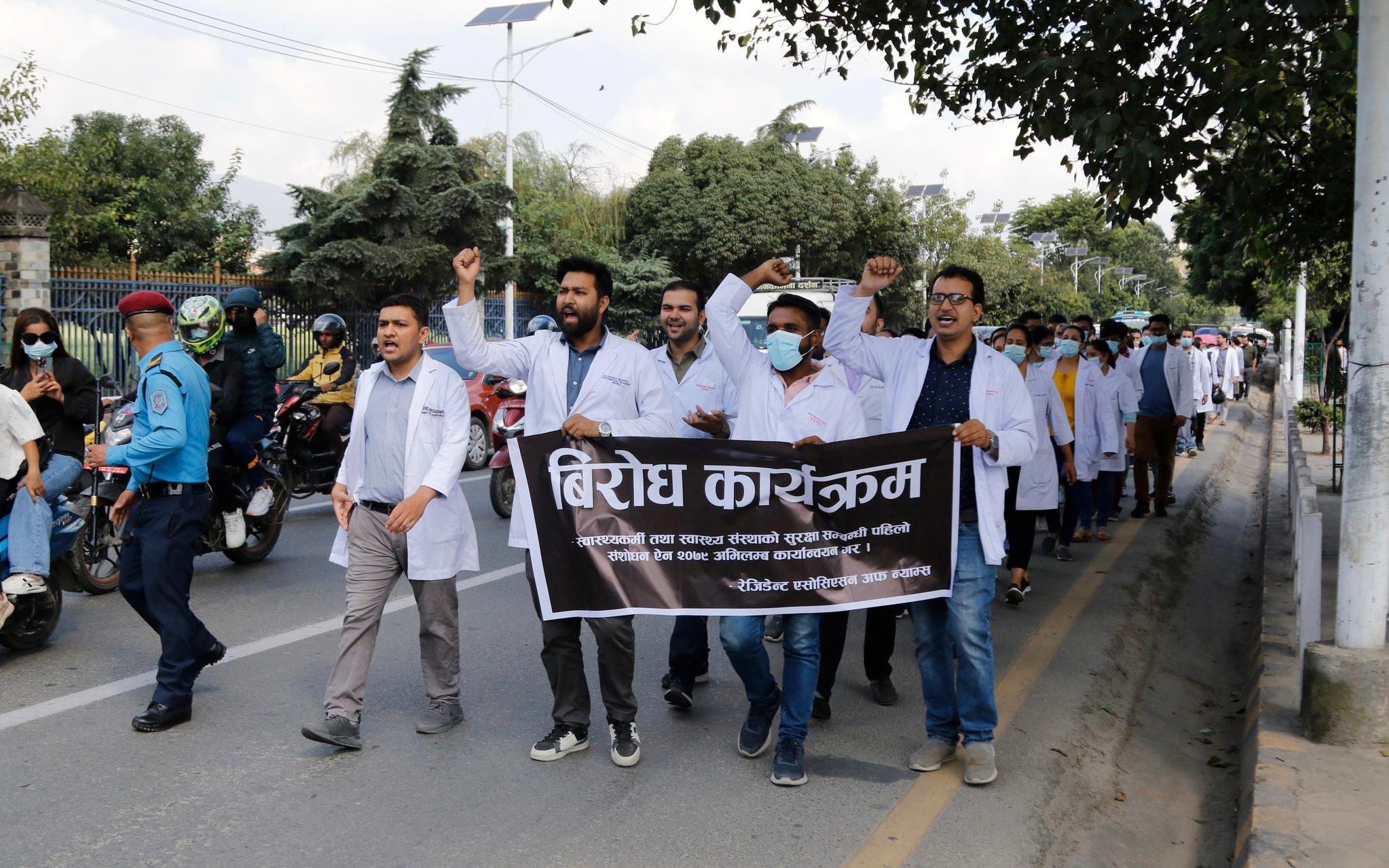
On July 7, 2025, doctors across Nepal stopped all medical services except emergency care. This action, called a Nepal doctors strike, was led by the Nepal Medical Association (NMA), a group that speaks for doctors. The protest started because courts in Nepal ordered doctors and hospitals to pay a lot of money, called compensation, when they made mistakes that hurt patients. These court decisions made doctors very upset, so they decided to stop working on regular treatments to show their anger.
This Nepal doctors strike has caused big problems for people who need medical services. Major hospitals in Kathmandu, like Patan Hospital, Bir Hospital, and Tribhuvan University Teaching Hospital, have closed their regular services, such as check-ups and planned surgeries. Nine other health groups, including nurses and clinic workers, have also joined the protest, making the impact even bigger across Nepal. Many people who need regular doctor visits are now struggling to get help.
Why Are Doctors Striking?
The Nepal doctors strike began after the Consumer Court, a special court that protects people’s rights, made doctors and hospitals pay large fines for medical negligence. Medical negligence means when a doctor or hospital makes a mistake that harms a patient. For example, the court ordered Om Hospital to pay Rs 5.68 million, Grande City Clinic to pay Rs 5.7 million, and Himal Hospital to pay Rs 14.5 million. Most of these fines went to the doctors involved, which they say is unfair.
Dr. Anil Bikram Karki, the president of the Nepal Medical Association, told The Kathmandu Post, “Doctors cannot pay millions of rupees in fines for trying to save lives. We need to protest because the government isn’t listening to us.” The NMA believes these fines make it hard for doctors to do their jobs without fear of being punished. They also say that medical services are special and shouldn’t be judged like other businesses.
Dr. Sanjeev Tiwari, another NMA leader, said, “Our work is sensitive and based on science. It should be judged by the Nepal Medical Council, not a consumer court.” The NMA wants the government to change the rules so doctors aren’t punished so harshly. They are holding sit-ins, like one at Maitighar Mandala in Kathmandu, to demand these changes.
How Does This Affect Patients?
The Nepal doctors strike has left many people without the medical services they need. For example, at Bir Hospital, the oldest and busiest public hospital in Kathmandu, only emergency care is available. Dr. Dilip Sharma, the hospital’s director, said, “We are only helping with emergencies right now. We hope this gets fixed soon.”
People who need regular treatments, like check-ups or medicines for long-term illnesses, are being turned away. A patient named Himal Sapkota traveled from Dailekh to the National Trauma Center in Kathmandu for a head injury surgery. When he arrived, he found out the doctors were on strike. His father, Gajadhar, said, “We came all this way, but we couldn’t see a doctor.” This shows how the protest is hurting people who need help.
In rural areas, where hospitals are already hard to reach, the impact is even worse. Many families can’t afford private clinics, which are more expensive, so they rely on public hospitals like Patan or Bir. With these services closed, people are suffering. Some patients were even sent to private clinics owned by the striking doctors, which has made people angry.
What Do Others Say?
Not everyone agrees with the Nepal doctors strike. Jyoti Baniya, who leads the Forum for the Protection of Consumer Rights-Nepal, said, “Stopping medical services and leaving patients without care is wrong. Patients have the right to go to court if they are hurt by medical negligence.” He believes the doctors are punishing patients instead of working with the government to find a solution.
Experts from the Nepal Medical Council also disagree with the protest. One former member said, “Not all doctors are perfect, and mistakes can happen. Patients should be able to seek justice.” They say stopping medical services is unfair to people who need help and doesn’t solve the problem.
The Ministry of Health is trying to fix the situation. Dr. Prakash Budhathoki, a spokesperson, said, “Medical services are very important and should not stop. We are talking to the NMA to solve this.” But the doctors say they will keep protesting until the government changes the rules.
What Happens Next?
The Nepal doctors strike is the second one in two months. In April 2025, doctors also stopped medical services to support student doctors who wanted fair pay. That protest ended after the government made promises, but this time, the NMA says they won’t stop until their demands are met.
On X, people are talking about the impact. One person wrote, “Patients are suffering because of this Nepal doctors strike. It’s not fair!” Another said, “Doctors work hard, but they shouldn’t punish patients to make their point.” These posts show how divided people are about the protest.
The Nepal doctors strike is causing a big problem for Nepal’s healthcare. While doctors want fair treatment, patients are paying the price. The government needs to act fast to bring back medical services and help both doctors and patients. For now, only emergency care is available, and many Nepalis are hoping for a quick solution so they can get the care they need.
Comments
0