
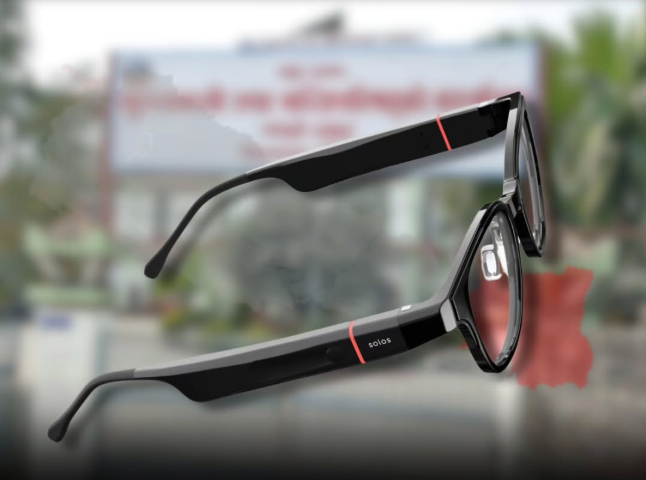
In a major step toward inclusive education and digital empowerment, the Koshi state government has announced the distribution of AI-connected smart glasses to underprivileged visually impaired students across the province. This new initiative is expected to transform the daily lives of students living with blindness or low vision, giving them access to cutting-edge tools that help them interact more freely and confidently with the world around them.
The announcement was made by Minister for Economic Affairs and Planning Ram Bahadur Rana Magar during the state budget presentation in the Koshi Provincial Assembly on Sunday. The initiative is inspired by Indian eye specialist Dr. Nitin Dedhia, who previously donated a similar pair of AI glasses to visually impaired Nepali singer Menuka Padel, changing her life in powerful ways.
"This project is about giving students hope, ability, and independence," said Minister Magar. "With technology, we can break barriers and bring opportunity."
What Are AI Smart Glasses?
The AI smart glasses are a special kind of wearable technology made for people who are blind or visually impaired. These glasses are equipped with tiny cameras and smart sensors. When someone wears them, they can recognize objects, people, text, and the environment and describe them out loud using a small speaker.
Key features of these glasses include:
Cameras that see surroundings in real-time
Audio feedback that tells the user what’s around them
Braille buttons on the side for different controls
Internet connectivity, using platforms like Google, to provide updated and accurate information
This means that a visually impaired student can now do things like read books, recognize classmates, understand street signs, and navigate school grounds independently.
“It’s like giving eyes that talk,” said one official from the Department of Education.
Helping the Underprivileged First
This project will begin by focusing on students from underprivileged backgrounds who are currently studying in schools for the blind or in inclusive schools. These students often do not have access to modern technology due to financial difficulties.
The government has said that this program is part of a larger plan to make education more accessible and inclusive. By using technology, they want to reduce inequality and help all students learn in ways that work best for them.
“A smart tool like this isn’t just helpful—it’s life-changing,” said an educator working with visually impaired children in Biratnagar.
Inspired by a Real Story
The project was inspired by a real-life story of hope and change. Indian doctor Nitin Dedhia, known for his work in eye care, donated a pair of AI glasses to Menuka Padel, a young Nepali singer who is visually impaired. After receiving the glasses, Menuka shared how her life became easier—she could move around alone, recognize people, and learn new things faster.
This emotional story caught the attention of the Koshi state government and became the spark behind this larger initiative.
“If one pair of glasses can help Menuka, imagine what 1,000 can do for our students,” Minister Magar said during his budget speech.
What This Means for Nepal’s Education Future
This initiative is a big step forward for Nepal’s use of smart and inclusive technology in education. The Koshi government is leading the way in showing how artificial intelligence (AI) can be used for good.
Many experts believe this project will:
Encourage students with disabilities to stay in school
Reduce dependence on others for daily tasks
Help teachers and parents better support their children
Set an example for other provinces and the federal government
There is also hope that more private organizations and donors will support the program so that it can grow.
A Promise of Dignity and Opportunity
At the heart of this project is a promise to give visually impaired students a chance to live with dignity, independence, and confidence. It’s not just about technology—it’s about equal opportunity.
Many of these children have talents, dreams, and ambitions. These AI smart glasses will not only help them learn better but also explore the world more freely, giving them a brighter future.
A Clearer Vision for All
The Koshi government’s AI smart glasses program is a shining example of how technology and compassion can come together to change lives. With these glasses, visually impaired students in Nepal will no longer be left behind. Instead, they will walk forward—smarter, stronger, and full of hope.
As this program begins, all eyes will be on Koshi to see how this bold step into inclusive technology shapes the future of education and equality in Nepal.
Comments
0