
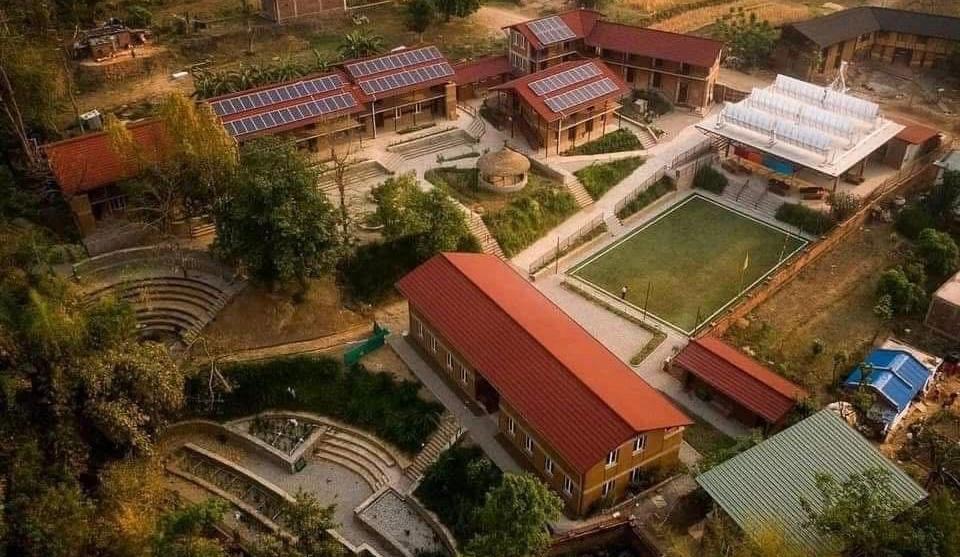
In a small corner of Surkhet, Nepal, a remarkable school is making waves on the global stage. Kopila Valley School, run by the BlinkNow Foundation, has earned a spot as a Top 10 finalist for the 2025 World’s Best School Prize in the Environmental Action category. This isn’t just a school—it’s a beacon of hope, teaching kids how to care for the planet while giving them a brighter future. Founded to support the most vulnerable children, this nonprofit school is showing the world how education and sustainability can go hand in hand.
Nestled in the Karnali Province, where monsoons, landslides, and deforestation threaten daily life, Kopila Valley School serves over 400 students from disadvantaged backgrounds. The school’s Green School Campus, built in 2019, is a living classroom where kids don’t just learn about the environment—they live it. From solar-powered cooking to rainwater recycling, every corner of the campus is designed to teach sustainability. The school provides free education, meals, and healthcare, ensuring kids can focus on learning without worrying about basic needs.
What makes Kopila Valley stand out? It’s their hands-on approach to environmental education. Students dive into regenerative agriculture, waste management, and water conservation through practical projects. Over 150 students participate in weekly gardening classes, learning how to grow food sustainably. The school’s zero-waste initiative has achieved a 91% landfill diversion rate, and single-use plastics are a thing of the past. These kids aren’t just students—they’re climate leaders sharing their knowledge with their families and communities.
The BlinkNow Foundation, founded by Maggie Doyne, is the heart behind this mission. At just 19, Maggie saw the struggles of children in rural Nepal and decided to act. With her life savings, she started the Kopila Valley Children’s Home and later the school. Today, BlinkNow supports not just education but also community outreach, women’s empowerment, and health programs. The foundation’s commitment to sustainability is woven into every program, making Kopila Valley a model for others.
This global recognition comes from T4 Education, which launched the World’s Best School Prizes in 2022 to celebrate schools transforming lives. Kopila Valley’s nomination in the Environmental Action category highlights its innovative practices. The school’s open-source model allows educators and leaders worldwide to visit and adopt its methods. Nepal’s national curriculum now includes elements inspired by Kopila Valley’s approach, and other regional schools are following suit.
The numbers tell a powerful story. 100% of graduates leave with climate literacy, and 95% pass the national 10th-grade exams. An impressive 63% of students go on to higher education, a rare feat for kids from marginalized communities. The school partners with 22 local female farmers to provide fresh meals, tackling malnutrition while supporting the local economy. Every day, 500 nutritious meals are served, grown right on the school’s organic farm.
Kopila Valley’s campus is a masterpiece of eco-friendly design. Rammed earth walls keep the buildings cool, and solar panels power the entire campus on sunny days. A concentrated solar power system cooks meals for hundreds, while rainwater harvesting ensures a steady water supply. The campus is dotted with 100 tree species, including 40 fruit-bearing ones, creating shade and snacks for students. This isn’t just a school—it’s a living laboratory for sustainability.
The school’s impact reaches far beyond its walls. Students lead community projects, teaching families about recycling and sustainable farming. A cooperative from the Kopila Valley Women’s Center turns rice bags into reusable totes, cutting down on plastic waste. During Earth Day, the school hosts week-long events to deepen environmental awareness. Teachers and staff even undergo permaculture training to better understand the local ecosystem.
This isn’t the first time Kopila Valley has been recognized. In 2023, it was named Nepal’s Greenest School by Project Green Schools and won the Green Difference Award. It also earned the Social Welfare Education Award from Nepal’s government and the Sustainability Initiative Award from BETT Asia. These accolades show that Kopila Valley’s model is not just effective but replicable—a blueprint for schools worldwide.
The journey to the top isn’t over yet. Kopila Valley is competing at the World Schools Summit in Abu Dhabi on November 15-16, 2025. The winner will be decided partly by public votes, and the school is calling on everyone to support them. Top Bahadur Malla, chairperson of the Kopila Valley Society, calls this a matter of national pride for Nepal. Principal Rajen Kumar Karki urges people to vote, emphasizing the chance to put Nepal on the global stage. You can cast your vote at the T4 Education website.
For the kids at Kopila Valley, this is more than a prize—it’s a chance to show the world what’s possible. From poverty and food insecurity to climate challenges, these students face tough realities. Yet, they’re growing into problem-solvers and leaders. The school’s Montessori-inspired approach encourages creativity and critical thinking, preparing students to tackle big issues.
Kopila Valley School is proof that education can change lives and the planet. By blending academic excellence with environmental stewardship, it’s shaping a generation ready to fight for a sustainable future. As the world watches, this small school in Surkhet is showing that big change starts with bold ideas and brave kids.
Comments
0