
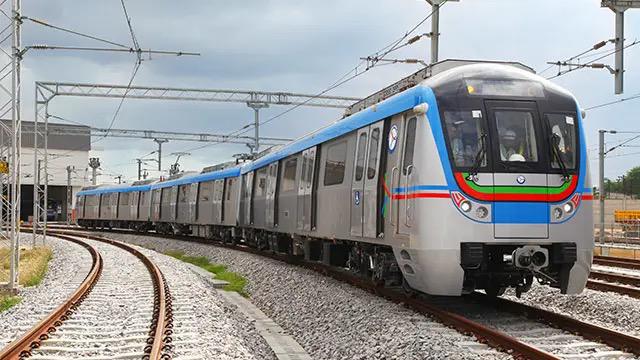
Traffic jams, honking horns, and clouds of dust—welcome to Kathmandu Valley, where getting around feels like a daily battle. With 1.75 million vehicles clogging the roads, the capital is choking on pollution and congestion. But a team of UK-based Nepali engineers, led by Dr. Binodlal Amatya, has a bold plan to change that: a 192.5 km metro rail project that could transform how people move across 18 municipalities. Estimated at Rs. 25 arba, this ambitious idea promises to ease traffic, clean the air, and create thousands of jobs.
The metro rail plan is no small dream. It includes five lines to connect key areas like Banepa, Dhulikhel, Godavari, and Budhanilkantha. The Kathmandu Line (36.5 km, from Banepa to Thankot) and the Patan Line (26 km, from Godavari to Budhanilkantha) are the first priorities, costing Rs. 10 arba combined. These lines will mix underground tunnels and elevated tracks, with 15 km of the Kathmandu Line and 14.5 km of the Patan Line going underground to avoid disrupting the city’s busy streets. Experts say these two lines could be ready in 12 years, offering a lifeline to a valley struggling with overcrowded roads.
Why does Kathmandu need this metro? The valley’s population is around 5 million, and the number of private vehicles keeps growing—21,805 new vehicles were sold in 2019 alone, compared to just 1,400 in 2005. Public transport, like buses, serves only 28% of commuters, and the average speed during peak hours crawls at 7 kmph. This gridlock fuels air pollution, with Kathmandu ranking as the sixth most polluted city globally. A metro rail could carry 20,000 to 50,000 passengers per hour, slashing the need for private cars and cutting emissions.
The plan, presented by the Institution of Civil Engineers and the Society of Nepalese Engineers UK, isn’t just about trains. It’s about urban regeneration, boosting connectivity, and sparking economic growth. The metro could create thousands of jobs during construction and operation, from engineers to station staff. It would also make the valley more livable by reducing traffic jams and encouraging public transport use. Dr. Amatya, a fellow of the Institution of Civil Engineers, says, “When mobility increases, productivity does too.”
But building a metro isn’t cheap or easy. The Kathmandu Line alone is estimated at $2.6 billion, with $2 billion for the Patan Line. Annual operating costs could range from $17 to $43 million for the Kathmandu Line and $12 to $31 million for the Patan Line. Funding could come from foreign investment, soft loans, climate funds, taxes, or even public contributions. Nepal’s government has struggled to fund big projects before, like the Kathmandu-Tarai Fast Track, which stalled despite plans for public-private partnerships. Learning from successes like the Delhi Metro or Dubai Metro, Nepal could tap international expertise and financing to make this work.
The engineering challenges are huge. Kathmandu’s soft soil and earthquake-prone terrain make tunnel construction tricky. Tunnels need to be 15 to 35 meters deep with 5.4 to 5.8-meter diameters and lined with earthquake-resistant concrete slabs. The valley’s uneven terrain and heritage sites add more hurdles—Lalitpur authorities once opposed elevated tracks to protect cultural jatras. An underground metro in core areas could preserve the city’s aesthetics while keeping construction less invasive.
Past metro plans in Kathmandu have fizzled out. In ** Asc2012, a South Korean firm studied metro feasibility, but political instability and local objections stalled progress. In 2018, six companies from China, India, Japan, Korea, and Turkey were shortlisted to prepare a detailed project report for a Nagdhunga-Dhulikhel line, but little happened. Lack of coordination among government bodies like the Department of Railways and Kathmandu Valley Development Authority has also slowed things down. This time, experts stress the need for a unified master plan and strong political will.
The proposed metro isn’t just about moving people—it’s about rethinking Kathmandu’s future. The five lines (Kathmandu, Patan, Bishnumati, Chakrapath, and Valley) would cover 192.5 km, linking 18 municipalities for better regional connectivity. Beyond reducing traffic, the metro could inspire urban planning that prioritizes sustainability. For example, electric buses or light rail could feed into metro stations, creating an integrated transport system.
Nepal’s government faces a choice: keep patching up roads or invest in a long-term solution. Experts like Padma Bahadur Shahi, president of the Society of Transport Engineers Nepal, say mass transit is the only way to manage Kathmandu’s growing population density. Without it, commuting could become impossible. The metro could also align with national rail projects, like the Raxaul-Kathmandu line, for broader connectivity.
To make this dream real, Nepal needs more than money. It needs efficient government, better research capacity, and public awareness. Construction quality must be high, and heritage preservation must be balanced with progress. The metro could redefine Kathmandu, making it a city where people move freely, breathe cleaner air, and thrive in a modern urban hub.
Comments
0