
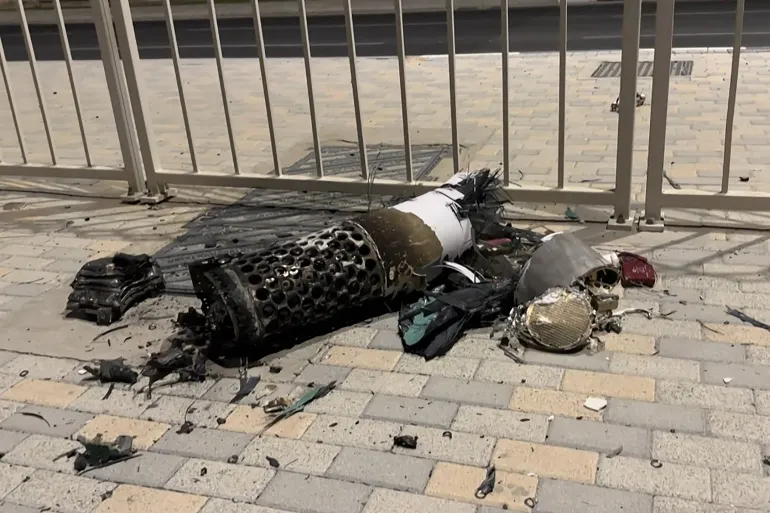
In a dramatic escalation of Middle East tensions, Iran launched a missile strike on the U.S. Al Udeid Air Base in Doha, Qatar, late Monday night. This shocking development was confirmed by Iranian state media, which aired footage of the missile launch along with a bold message declaring, “A powerful and successful response by Iranian armed forces.”
The U.S. Department of Defense acknowledged the attack shortly afterward, stating that damage assessments were underway and security protocols had been activated. Emergency sirens blared across the base as personnel took shelter and defense systems attempted interception.
Iran’s “Powerful Response”
The footage released by Iranian outlets showcased the missiles being launched from an undisclosed location, followed by dramatic visuals of explosions that they claimed struck near military infrastructure. While Iranian media celebrated the act as a form of retaliation for previous U.S. and allied actions, specific reasons behind the attack were not immediately disclosed.
The missile strike was described as a “measured” response to “provocations,” although no official Iranian spokesperson elaborated on the trigger. Many speculate it is tied to recent joint military operations conducted by the U.S. and Israel, which targeted suspected Iranian nuclear and military sites.
U.S. Confirms the Attack
The Pentagon issued a brief but firm statement: “We are aware of the missile strike targeting Al Udeid Air Base in Qatar. There are no confirmed casualties at this time. Our forces are taking all necessary precautions.”
Al Udeid Air Base is the largest U.S. military facility in the Middle East, housing over 10,000 American troops and featuring advanced aircraft and defense systems. The base plays a central role in regional operations, surveillance, and logistics, making it a significant strategic asset.
Qatar Reacts Swiftly
The Qatari government, caught in the crossfire of two powerful nations, reacted by temporarily shutting down its airspace to commercial flights for safety reasons. Flights were rerouted, and Hamad International Airport issued alerts to passengers advising of delays and diversions.
A statement from Qatar’s Foreign Ministry called for “restraint and dialogue over escalation and aggression.” Qatar, while hosting the U.S. base, has also maintained a working relationship with Iran, leaving its diplomatic position highly sensitive.
Citizens Urged to Stay Safe
Following the attack, both the U.S. Embassy in Qatar and the Nepali Embassy, due to the high number of Nepali migrant workers in Doha, issued safety warnings. Citizens were advised to stay indoors, avoid non-essential travel, and monitor official channels for updates.
Public areas in Doha saw reduced activity as news of the missile strike spread quickly on social media. In the hours following the attack, multiple rumors and unverified images circulated, heightening public anxiety.
Regional and Global Reactions
In Washington, President Biden was briefed on the situation and held an emergency meeting with national security advisers. An official response from the White House is expected soon. Political analysts believe this could shift the focus of U.S. foreign policy and military strategy in the Gulf region.
In Tehran, crowds reportedly gathered to celebrate the missile launch, waving flags and chanting slogans against Western forces. Iranian lawmakers praised the military for demonstrating “strength and sovereignty.”
Warnings of More to Come
Shortly after the missile strike, Iranian news outlets warned that additional responses could follow if the U.S. or its allies retaliate. The message was clear: Iran is willing to extend its military actions if provoked further.
Meanwhile, military analysts say the missile used was likely from Iran’s Fateh-series, a short-range ballistic missile system known for its precision and mobility. This suggests the strike was a deliberate, calculated move rather than a spontaneous assault.
Fear of Wider Conflict
This latest development has triggered widespread concern that the Middle East may be edging closer to full-scale conflict. Already plagued by proxy wars, political instability, and economic strain, the region now faces the real risk of confrontation between two powerful adversaries.
Air defense systems across the Gulf region have been put on high alert. U.S. forces in neighboring countries, including Kuwait and Bahrain, are reportedly reassessing security postures.
Global markets reacted with caution. Oil prices briefly surged due to fears of disrupted supply routes in the Gulf, while stock indexes saw moderate dips amid uncertainty.
Media, Diplomacy, and Misinformation
As the situation unfolds, social media has played a major role in spreading both verified and false information. The Al Udeid Air Base was trending across platforms within minutes of the Iranian announcement.
Governments have urged the public to rely on official sources and avoid circulating unconfirmed reports. The United Nations has called for calm and offered to mediate, urging both sides to avoid further military action.
The Road Ahead
While much remains uncertain, the missile strike on Al Udeid has undoubtedly altered the dynamics of U.S.–Iran relations. Diplomats around the world are watching closely, as one wrong move from either side could ignite consequences far beyond the borders of Qatar.
For now, the world holds its breath, hoping the roar of missiles doesn’t become a drumbeat of war.

Comments
0