
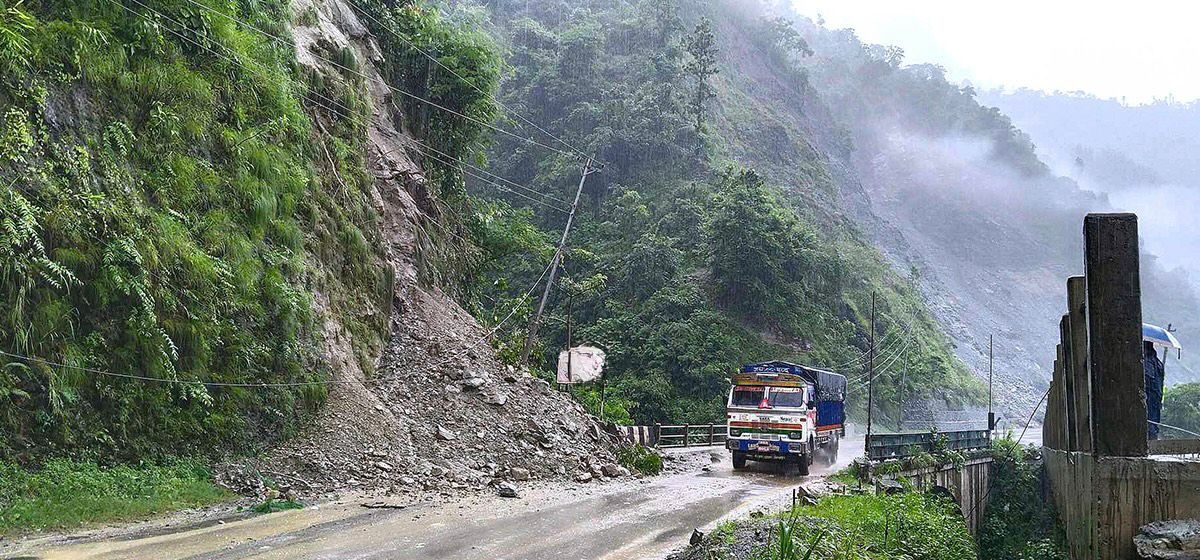
Butwal, June 16, 2025 –
Due to heavy rainfall and rising water levels in the Binayi River, the Butwal-Narayanghat highway has been closed in both directions. Officials say the road has become slippery, and strong water flow has made the highway unsafe for vehicles.
Hundreds of travelers have been affected by the closure. Authorities have asked the public to stay safe and avoid travel in the area until further notice.
⚠️ Important Reminder: Always check for road updates before starting your journey, especially during the rainy season.
What Happened?
On Monday morning, continuous rainfall made several parts of the highway dangerous. Water from the Binayi River rose quickly and began spilling near the road.
The rain also made the road surface slippery, which caused some vehicles to lose control. Traffic police and road workers quickly moved in and stopped traffic to prevent accidents.
“The road is not safe right now. Water is flowing close to the road, and there is a risk of landslides too,” said a highway patrol officer.
Where Is the Problem?
The trouble spot is mainly near Binayi area, which lies between Butwal and Narayanghat. This section of the highway often faces problems during monsoon due to its location near rivers and hills.
Both eastbound and westbound lanes are now blocked. No vehicles are allowed to pass — including cars, buses, and motorcycles.
"We have completely closed the highway to protect lives. Please wait for official updates," said the District Police Office.
What Are Officials Doing?
The Nepal Police, Road Division Office, and local government are working together to monitor the situation. Engineers are checking the road condition, and emergency teams are on standby in case of landslides or accidents.
Rescue teams have also been sent to help travelers who were stuck on the road before the closure.
"Our first priority is safety. We will reopen the road only when we are 100% sure it is safe," said a road engineer from the Department of Roads.
How Are Travelers Affected?
Many passengers traveling between Butwal and Narayanghat have been forced to wait for hours. Some vehicles have turned back, while others have stopped at nearby rest areas.
Buses carrying passengers, goods trucks, and personal cars are all stuck in long lines. There is no clear news yet on when the road will reopen.
“I was on my way to Chitwan for a job interview. Now I don’t know what to do,” said one frustrated traveler.
What Should You Do?
If you are planning to travel on the Butwal-Narayanghat highway, please cancel or delay your journey until the road is open again.
✅ Here are some safety tips:
Always check official traffic updates before you travel.
Do not drive on wet or flooded roads.
Be prepared for delays and carry food and water if you must travel.
Avoid traveling at night during heavy rain.
Keep in contact with local authorities or traffic police.
You can follow updates from:
Nepal Traffic Police official pages
District Administration Office
Radio and local news outlets
Monsoon Season Risks
Every year, the monsoon season in Nepal causes landslides, floods, and road blockages. Roads like the Butwal-Narayanghat highway are high-risk areas due to hills, rivers, and ongoing construction.
Experts say climate change is also causing more intense rainfall, making roads weaker and more dangerous.
“This is just the start of the rainy season. More problems may come, so we must stay alert,” said a meteorologist from the Department of Hydrology and Meteorology.
Government's Plan
The Ministry of Physical Infrastructure and Transport says it will install better warning systems, improve drainage, and fix weak parts of the highway to prevent future closures.
Temporary roadblocks and signs will also be placed in danger zones to inform drivers early.
Final Message to the Public
The closure of the Butwal-Narayanghat highway shows how important it is to be careful during bad weather. If you live or travel in hilly or river areas, stay updated, stay safe, and be prepared.
❗ Stay Safe Tip: Don’t take risks on flooded or slippery roads. Your safety comes first.
Comments
0