
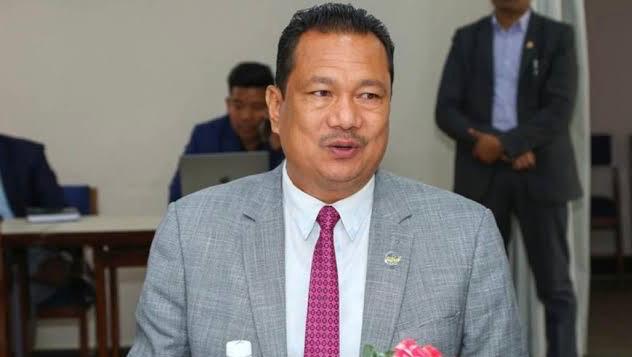
In a moment that shocked Parliament and stunned the public, Federal lawmaker Aman Lal Modi asked a question no one expected during a recent session: “Does our country have any plans to make nuclear bombs?”
His words echoed through the Parliament, catching many lawmakers off guard. The room fell into a moment of stunned silence as the Defense Minister prepared to respond.
A Question That Left the House Speechless
MP Modi didn’t stop with just one question. He added:
“Countries around the world are making them! What is our plan?”
This unexpected question has quickly become a topic of public discussion across Nepal. Social media exploded with reactions, with some praising Modi for addressing national security boldly, while others criticized the timing and implications of such a sensitive issue.
Why Did Modi Ask About Nuclear Bombs?
MP Modi’s concern stems from increasing global tensions. Countries like North Korea, Iran, India, Pakistan, and many Western nations possess or are upgrading nuclear weapons. The global political climate is shifting, and power dynamics are increasingly influenced by military capabilities.
By raising this topic, Modi may have intended to spark a conversation about Nepal’s national security policy in a rapidly changing world.
Although Nepal is internationally recognized as a peaceful, non-aligned country, Modi’s comment challenges the idea that peace alone is enough to secure national interests in today’s volatile geopolitical environment.
What Does the Constitution Say?
Nepal’s Constitution does not allow the development or storage of nuclear weapons. Nepal is also a signatory of several international treaties, including the Treaty on the Non-Proliferation of Nuclear Weapons (NPT), which promotes disarmament and restricts the spread of nuclear technology for military purposes.
Moreover, Nepal has always stood for peaceful diplomacy, being the land of Lord Buddha and home to various peace missions and dialogues.
That’s why the question from MP Modi felt like such a jolt to the system—it challenged the core values Nepal has held for decades.
Reactions Inside and Outside Parliament
Following the question, some lawmakers laughed nervously, others looked visibly uncomfortable, and some nodded with quiet curiosity. The defense minister, momentarily taken aback, responded by reaffirming Nepal’s commitment to peace and non-violence.
He stated clearly:
“Nepal has no plans to develop nuclear weapons. Our policies and international commitments guide us toward peaceful defense strategies.”
Citizens across the country have weighed in. Some see Modi’s question as an act of boldness, claiming that Nepal must think seriously about national defense in the face of regional and global threats. Others think raising such issues risks Nepal’s image as a peaceful nation.
Social Media on Fire
Within hours of the clip airing, Nepali social media platforms like X (formerly Twitter), Facebook, and TikTok were flooded with opinions. Memes, debates, and news summaries began circulating rapidly.
Some users supported Modi’s perspective, calling it a "wake-up call for national defense policy." Others mocked the question, suggesting it was unrealistic given Nepal's economy and international obligations.
Experts Speak Out
Defense analysts, scholars, and foreign policy experts offered mixed reactions. Professor Ram Prasad Adhikari, a political science expert, commented:
“While it is important to discuss defense strategy, nuclear weapons are a dangerous path, especially for a small, peaceful country like Nepal.”
Meanwhile, security expert Meena Shrestha said,
“The world is becoming more dangerous. Asking questions about national security, even bold ones, is not wrong. What matters is how we approach the issue responsibly.”
What Could This Mean for Nepal’s Foreign Relations?
Nepal’s stance on nuclear disarmament is one of the few clear pillars of its foreign policy. The country is seen globally as a promoter of peaceful coexistence and non-aggression. Any conversation around nuclear development could raise eyebrows in the international community, especially among donors and strategic partners.
India and China, Nepal’s closest neighbors, both possess nuclear weapons. But both have also signed treaties and follow international protocols regarding their use. Nepal, sandwiched between these two giants, has maintained a non-threatening posture, which has helped it avoid unnecessary military entanglements.
Changing this posture, even though a single question in Parliament, may create diplomatic misunderstandings or misinterpretations—unless carefully clarified.
Could Nepal Even Build a Nuclear Bomb?
Technically, no. Nepal lacks the infrastructure, scientific expertise, and financial resources to even begin the process. Nuclear weapons require uranium enrichment, advanced technology, and years of research, not to mention global scrutiny and isolation for trying to develop them.
Developing such weapons would mean violating international treaties, facing sanctions, and destroying the very foundation of Nepal’s peace-based identity.
A Wake-Up Call or Political Stunt?
Critics argue that MP Modi’s question was more about political visibility than actual policy direction. However, supporters claim it was a provocative but necessary reminder that the country should be re-evaluating its national security framework in light of changing global dynamics.
The question might have been about nuclear bombs, but the larger issue at hand is whether Nepal needs to revisit its defense strategy in an increasingly unstable world.
Comments
0