
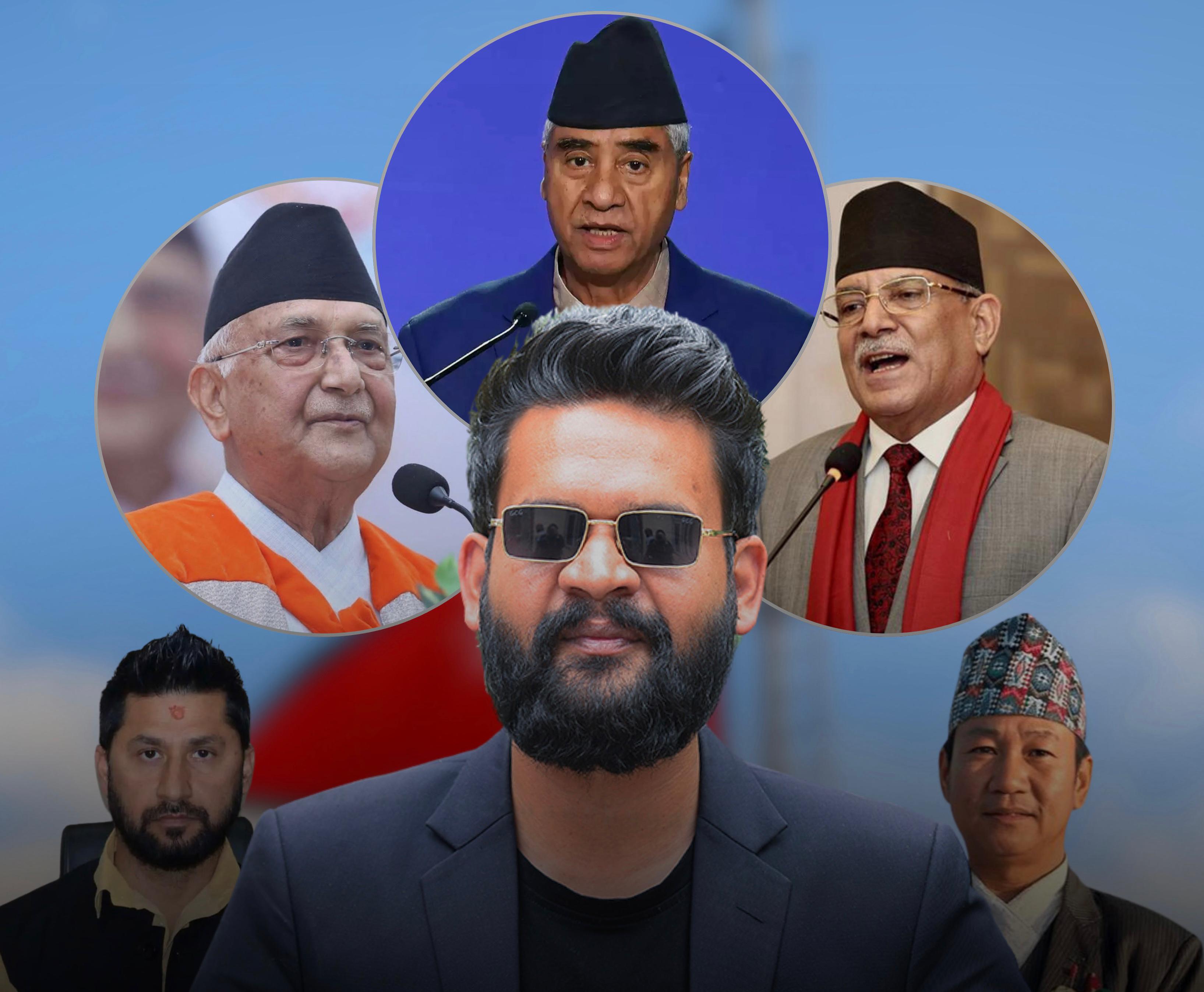
Fresh energy with Bold leadership Balen Shah Genz Political Hero!!!!
These are just a few words that young Nepalis use to describe their most admired political figure Balen Shah, the Mayor of Kathmandu. A recent nationwide survey shows that he’s not just a local favorite, but a phenomenon among Nepal’s Gen Z population. With an impressive 74.18% of 1,019 respondents across all seven provinces backing him, Balen Shah has emerged as the undisputed leader of the youth in Nepal’s modern political landscape.
This overwhelming support sets him far ahead of his contemporaries. The second most popular figure, Rabi Lamichhane, received 35.75% of the votes, while Harka Sampang, the mayor of Dharan, gained 31.67%. The traditional powerhouses of Nepali politics—KP Sharma Oli, Pushpa Kamal Dahal (Prachanda), and Sher Bahadur Deuba were left far behind, with minimal favor among Gen Z voters.
So, what makes Balen Shah such a powerful name in Nepal today?
The Rise of a Rapper-Turned-Reformer
Balen Shah wasn’t born into a political family. He didn’t grow up in the corridors of power. In fact, he first caught the public’s attention as a rapper and structural engineer, not a politician. But it was exactly this outsider status that helped him gain traction with the youth many of whom are disillusioned by decades of political instability, corruption, and broken promises.
When Balen ran for the mayoral seat in Kathmandu in 2022, few took him seriously. But his campaign, focused on transparency, action, and city-wide reforms, struck a deep chord with urban voters—especially the younger ones who were ready for change. He won the election as an independent candidate and quickly got to work—clearing illegal structures, pushing digital governance, and improving waste management.
A Leader That Walks the Talk
Unlike many politicians who rely on big words and little action, Balen Shah is known for getting things done. Whether it’s removing illegal encroachments, dealing directly with city waste issues, or holding bureaucrats accountable, his approach is hands-on and visible.
Gen Z voters born between the late 1990s and early 2010s grew up watching their elders suffer through economic hardship, political games, and a lack of basic services. Now as young adults, they see in Balen someone who refuses to play by old rules. He doesn’t wear the typical political mask. He’s real, relatable, and most importantly, results-oriented.
Numbers Speak Louder Than Words
The survey covered respondents from all seven provinces, making the results reflective of nationwide sentiment. While Balen topped the chart with 74.18%, the rest of the field struggled to catch up:
- Rabi Lamichhane, known for his background in journalism and recent political entry, got 35.75% support.
- Harka Sampang, famous for his grassroots water management campaigns in Dharan, followed with 31.67%.
In contrast, traditional party leaders like KP Oli, Prachanda, and Deuba failed to gather notable Gen Z support. This points to a generational shift in political preferences. The young no longer find themselves represented by old faces and outdated ideologies.
Changing the Political Game
What’s also striking is Balen Shah’s ability to unite young people across geographic and cultural lines. Whether it's in the urban chaos of Kathmandu or the more remote corners of Province 6 and 7, his influence cuts across caste, language, and class. That’s a rare feat in a country often divided by identity politics.
His rise signals something bigger than one man’s popularity. It’s a sign of Nepal’s youth rising to take charge of their future—demanding performance, not party loyalty. For the first time in a long time, the country’s young generation has found a political figure they can believe in without reservation.
Why Traditional Leaders Are Losing Grip
The low support for major party figures like KP Oli, Prachanda, and Deuba highlights the growing distance between older leaders and young voters. These leaders have held power for years, but for Gen Z, they symbolize stagnation, not stability.
Frequent changes in government, slow policy implementation, and a lack of employment opportunities have made youth question the value of traditional politics. Meanwhile, independent leaders like Balen are proving that governance doesn’t have to be slow or corrupt.
A Generation That Wants More
This generation is digital, connected, and socially aware. They value transparency, creativity, and inclusivity. Political slogans don’t sway them; results do. Leaders like Balen Shah, Rabi Lamichhane, and Harka Sampang are tapping into that sentiment with authenticity and action.
What also makes Balen stand out is his non-political branding. He doesn’t push ideology. He pushes change. That resonates deeply with a generation looking for hope and solutions—not more promises.
Moving Beyond Kathmandu
Although Balen is the Mayor of Kathmandu, his influence is quickly growing beyond the city. Videos of his public statements, policy changes, and ground visits frequently go viral on platforms like TikTok, YouTube, and Instagram. These platforms are where Gen Z gets most of its news and information—making Balen a familiar face across digital Nepal.
His appeal shows how digital communication and urban leadership can shape national political narratives, especially when traditional media fails to engage younger audiences.
A New Political Landscape
The message is clear: Nepal’s political future will be shaped by fresh faces, fresh ideas, and fearless leadership. And leading that charge, right now, is Balen Shah—the rap-battling, bridge-building mayor who speaks the language of his generation.
As support continues to surge from all parts of the country, it’s becoming harder for old-school politicians to ignore the writing on the wall: Gen Z is watching, choosing, and demanding change—now more than ever.
Comments
0