
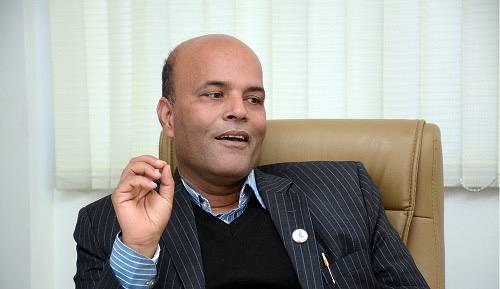
“Why not lease 73 districts to India or America and keep 4-5 for the budget?” This sarcastic comment from Independent MP Amesh Kumar Singh shook the very walls of Nepal’s Parliament. Known for speaking his mind, Singh took the government to task in a way few dared to — and his words lit a political firestorm. The moment he remarked, tension surged. His comment, which came during a heated session on national budget distribution, quickly escalated into one of the most controversial statements heard in Parliament in recent times.
Budget Discrimination Sparks the Fire
The national budget was the heart of the debate. Amesh Kumar Singh accused the government of bias in budget allocation. According to him, only a few districts — usually those aligned with the ruling party — were getting proper development funds, while others were left behind.
“Just lease out the rest,” he said in frustration, pointing to the 73 districts that he believed were unfairly treated. He implied that only 4-5 districts — the “lucky” ones — were receiving fair budget shares, sarcastically calling them the favorites of the government.
His words were not meant literally, but as a sharp critique of government favoritism. Still, they echoed loudly across party lines.
Ruling Party’s Instant Reaction
As expected, the ruling party MPs erupted. They stood up angrily, accusing Singh of insulting national pride and making an anti-national statement. Speaker Devraj Ghimire quickly intervened and declared Singh’s comment “unparliamentary.”
Despite the uproar, Singh refused to back down. He defended his remark as a metaphor to express the deep frustration felt by many citizens and lawmakers over the unfair development practices in Nepal.
"I said it because I’m tired of watching some districts get everything while others get ignored," he said, standing firm in his belief that the government is creating regional inequality through selective investment.
Standing Alone but Speaking Loud
Amesh Kumar Singh is not new to controversy. As an Independent MP, he doesn’t belong to any major political party, and this allows him to speak with relative freedom. While his critics call him reckless, many youth and frustrated citizens see him as a voice of truth in a sea of political games. By highlighting government discrimination, Singh tried to hold leaders accountable for what he sees as unequal treatment of the country’s diverse regions. His sarcastic proposal struck a nerve, not because it was practical, but because it spoke to a reality many feel but few express.
Speaker’s Authority Questioned
After calling the comment unparliamentary, Speaker Devraj Ghimire attempted to steer the session back to order. However, Singh countered this by raising questions about the Speaker’s impartiality. He claimed that opposition voices were constantly being silenced, while those in favor of the ruling party were allowed to speak freely, even when they crossed lines. Singh’s supporters in and outside Parliament applauded his courage to speak out, especially on a topic as sensitive as national unity and district-level inequality. His words may have been sharp, but they triggered a national conversation.
Public Reaction: Divided but Awake
On social media, the controversy exploded. Hashtags like #AmeshKumarSingh, #NepalBudget, and #DistrictDiscrimination began trending within hours. Some called Singh a patriot for speaking uncomfortable truths. Others labeled him irresponsible for making such a sarcastic and sensitive remark.
Many ordinary citizens from underdeveloped areas voiced support, saying they too felt neglected by the government. They echoed Singh’s frustration, though not necessarily his method.
Meanwhile, government loyalists accused Singh of playing with national sovereignty, even suggesting possible disciplinary action.
Unequal Budget: A Long-standing Issue
Singh’s comment brought attention back to an old issue in Nepal — centralized governance and skewed budget allocation. For decades, politicians have promised equal development. But in reality, budget distribution often favors regions aligned with powerful parties or leaders.
Districts in the Terai, the Far West, or areas not represented by ruling party MPs often get less funding, fewer development projects, and minimal policy attention. Singh’s sarcasm, while controversial, pointed directly at this longstanding imbalance.
The Bigger Picture
What makes this issue so explosive is that it touches Nepal’s fragile unity. The country is home to many cases, ethnic groups, and regions, all with their own identities and development needs. When budgets are distributed unfairly, it can deepen regional resentment, something Nepal cannot afford.
By boldly confronting the ruling party, Amesh Kumar Singh has placed himself at the center of a growing dissatisfaction with centralized power and elite politics. Whether one agrees with his words or not, his message has reached the public.
Comments
0