
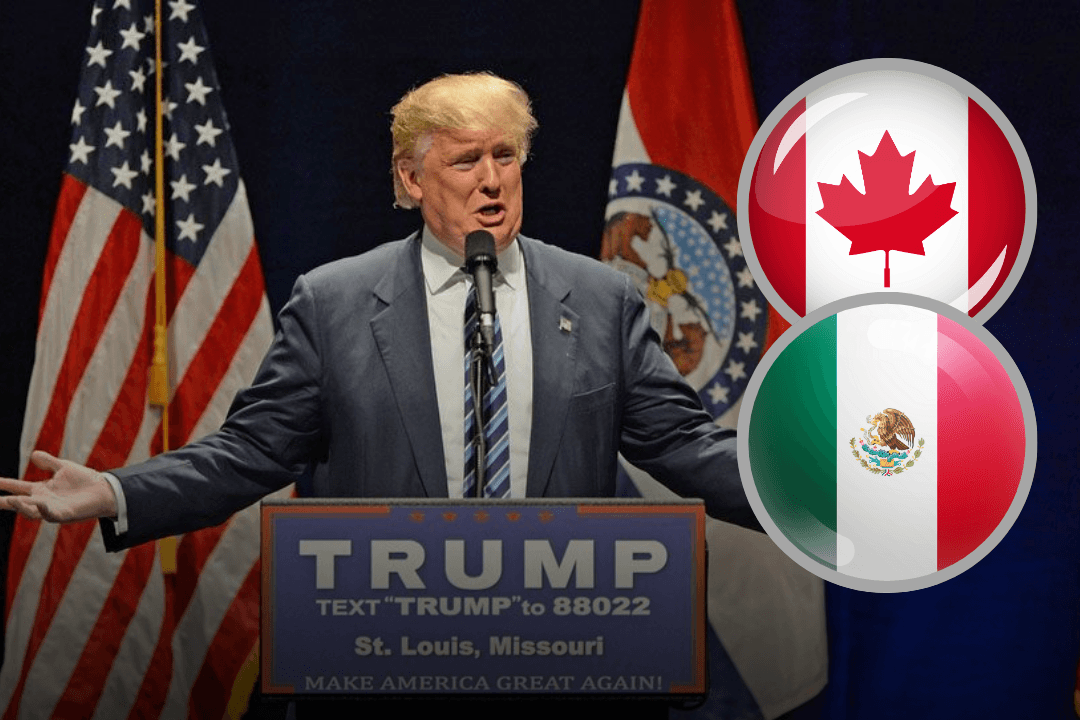
At a White House press conference, President Donald Trump announced that the 25% tariffs on imports from Canada and Mexico will proceed as planned. These tariffs, which were previously put on hold due to negotiations regarding border security, will take effect next week following the expiration of the current delay.

Trump emphasized that the tariffs are part of his administration’s broader strategy to address what he considers unfair trade practices that have negatively impacted the U.S. economy. He stated that Canada and Mexico have long benefited from trade agreements that disadvantage American manufacturers and workers. By imposing these tariffs, he aims to encourage domestic production and reduce reliance on foreign imports.
The tariffs were initially delayed after Canada and Mexico pledged to take stronger measures to secure their borders and address trade imbalances. However, Trump’s latest announcement signals a shift in policy, as the administration now believes that these commitments have not been met to a satisfactory degree. The decision is expected to impact industries across North America, particularly in the automotive, steel, and agricultural sectors.

Critics argue that the tariffs could lead to higher prices for American consumers and potential retaliation from Canada and Mexico, which may impose their own tariffs on U.S. goods. Supporters, on the other hand, view the move as a necessary step toward achieving fairer trade deals and strengthening American industry.
As global markets react to this development, trade analysts warn that escalating tensions could have long-term consequences on North American trade relations. Businesses that rely on cross-border imports and exports are now bracing for potential disruptions, while policymakers in Canada and Mexico consider their next steps.


Reader discussion
Comments
0